Send Money to Ghana from Norway: Top Transfer Options Compared
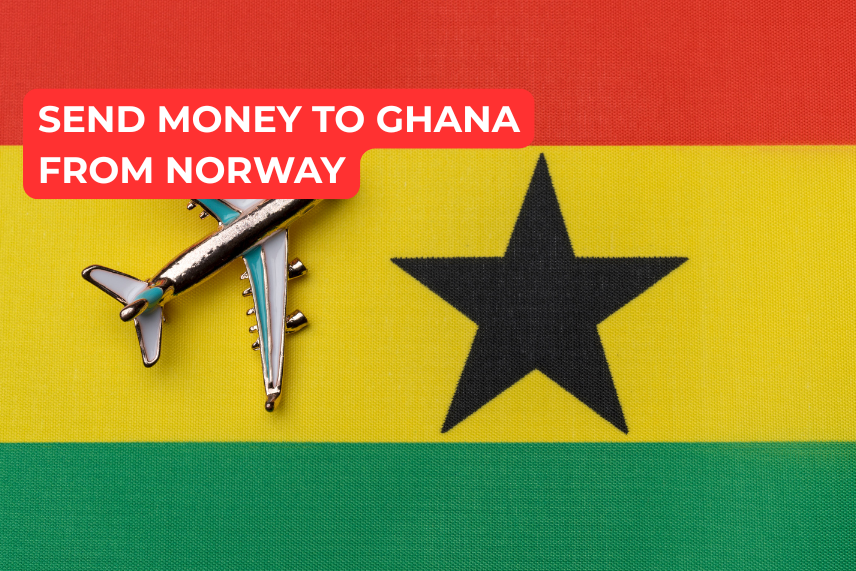
Living in Scandinavia means balancing two vastly different financial ecosystems. If you are regularly converting Norwegian Krone (NOK) into Ghanaian Cedis ($GHS$), you already know that the remittance corridor from Northern Europe to West Africa can be a minefield of unpredictable expenses.
When you want to send money to Ghana from Norway, the challenge isn't finding a way to do it, it's ensuring that a massive chunk of your hard-earned money doesn't vanish into banking black holes before it reaches your family.
The Hidden Engine: Why Exchange Cross-Rates Matter
Many expats planning to send money to Ghana make the mistake of looking only at the flat transaction fee. To truly maximize your transfer, you have to understand the math happening behind the dashboard.
Most global remittance networks do not convert $NOK$ directly to $GHS$ in a single leap. Instead, your money often goes through a multi-currency conversion loop involving intermediate Nordic or European currencies. This is where tracking regional benchmarks becomes crucial. Remittance platforms frequently peg their baseline operational metrics to standard European currency spreads, meaning fluctuations in pairs like NOK to GHS (Danish Krone to Ghanaian Cedi) or its reverse, ghs to nok, heavily influence the conversion algorithm used for your Norwegian Krone.
If a provider offers a poor baseline rate on NOK to GHS, it is a strong indicator that their overall West African rates are inflated across the entire Scandinavian region—including Norway. Always look for platforms that use a clean, transparent calculation modeled closely on the mid-market exchange rate.
Evaluating the Top Transfer Frameworks
To make an informed decision, it helps to weigh the structural trade-offs between the primary channels available to the diaspora in Norway:
1. Digital Remittance Specialists (The Balanced Option)
Platforms engineered specifically for African corridors offer the most practical middle ground for daily or monthly family support.
- The Blueprint: Companies like Riz Remit bypass traditional clearing networks to move money faster and cheaper.
- The Advantage: By focusing heavily on the region, these services can offer highly competitive exchange rates, lower structural overhead, and native integration with Ghanaian financial systems.
2. Digital Banking Apps (The Corporate Alternative)
Mainstream fintech platforms offer great security but come with strict regional parameters.
- The Blueprint: Utilizing multi-currency borderless accounts to hold and convert funds digitally.
- The Advantage: Excellent interface security and low fees for standard bank-to-bank transfers. However, their rates can become less favorable during weekend market closures, and they may lack direct, hyper-localized payout options for rural recipients.
3. High-Street Scandinavian Banks (The Legacy Route)
Using your traditional Norwegian retail bank account to send an international wire.
- The Blueprint: A standard outbound SWIFT transfer from your local bank directly to a commercial bank in Accra or Kumasi.
- The Disadvantage: This is almost always the most expensive route. Traditional banks charge hefty flat processing fees, take several business days to settle, and utilize retail exchange rates that are heavily marked up against the sender.
Critical Factors Beyond the Exchange Rate
Before finalizing your next transfer, review these operational variables to avoid unexpected delays:
- Wallet Tier Restrictions: If you are routing money to a mobile money wallet (such as MTN MoMo or Telecel Cash), ensure your recipient's account tier is cleared to receive the volume you are sending. Exceeding daily or monthly wallet limits will cause the transaction to hold or bounce.
- Funding Surcharges: How you pay for the transfer in Norway alters the cost. Funding your transaction via a standard bank transfer or BankID-verified payment keeps costs minimal, whereas using a credit card can trigger immediate cash-advance interest from your card issuer.
- Compliance and Documentation: For larger capital transfers—such as property investments or corporate invoices—keep your documentation clear. Both Norwegian and Ghanaian regulatory bodies track cross-border flows, so keeping clean records ensures your funds are never frozen for routine verification.
No Related Articles !!!
 Saxon House, 27 Duke Street, Chelmsford, Essex, England, CM1 1HT